

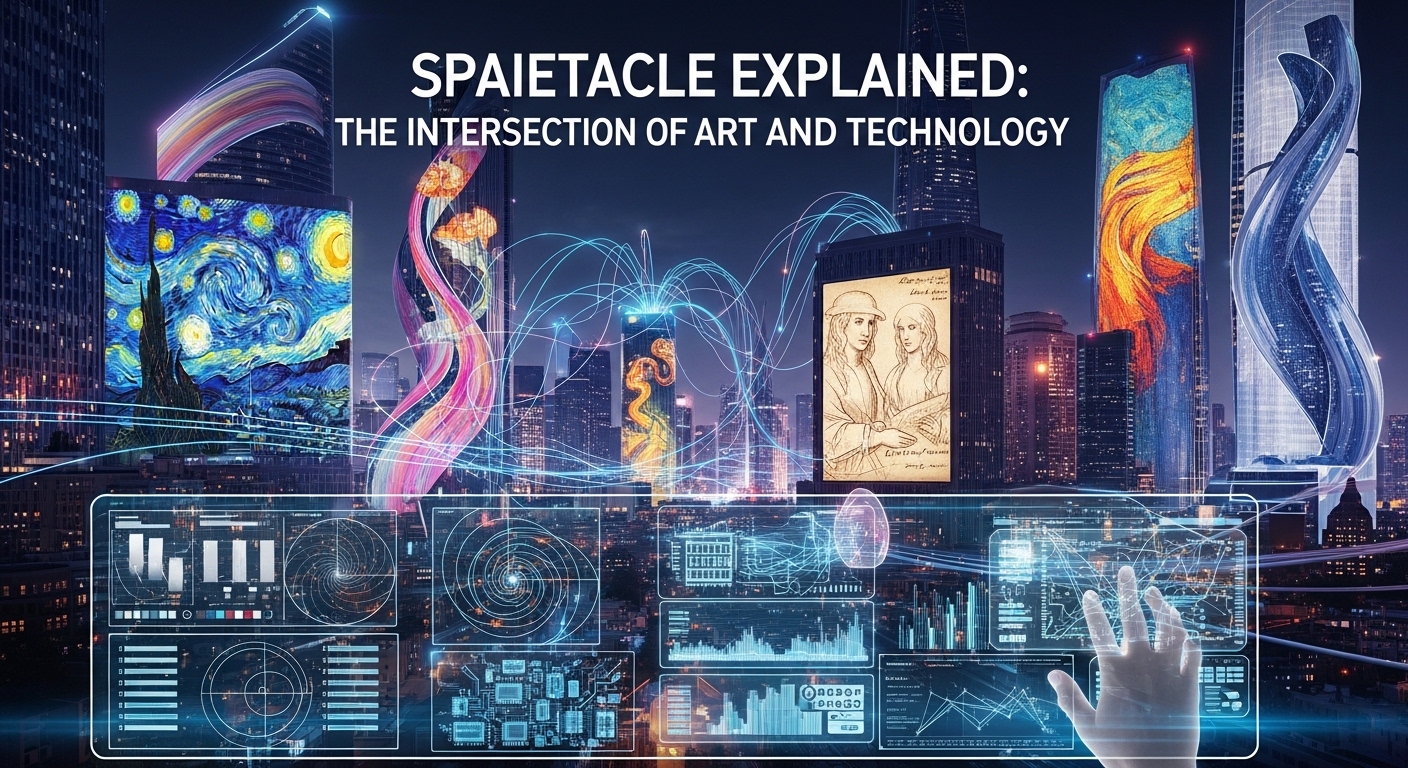
Art has always been a reflection of society, capturing its essence and pushing boundaries. But what happens when it collides with technology? Enter Spaietacle—a fascinating blend of spectacle and spatial experience that transforms how we perceive art. This innovative concept challenges traditional notions, inviting audiences to immerse themselves in multisensory environments where creativity knows no bounds.
As artists embrace new tools and mediums, the world is witnessing an artistic renaissance like never before. From immersive installations to interactive experiences, Spaietacle embodies this evolution by merging physical spaces with digital innovation. Are you ready to explore this captivating intersection where artistry meets cutting-edge tech? Let’s dive in!
The Rise of Technological Advancements in the Art World
The art world is undergoing a transformation, driven by rapid technological advancements. Artists are now leveraging tools that were once unimaginable.
Virtual reality (VR) and augmented reality (AR) have opened new dimensions for creativity. These technologies allow viewers to step inside artworks, creating immersive experiences that engage the senses in unprecedented ways.
Digital art platforms are flourishing too. Artists can create, share, and sell their work globally with just a few clicks. This democratization of access is reshaping traditional galleries and exhibitions.
Moreover, artificial intelligence is making waves as well. AI-generated art challenges our understanding of creativity itself. It raises questions about authorship while pushing boundaries on what constitutes artistic expression.
As these innovations continue to evolve, they spark exciting discussions among creators and audiences alike—making the intersection between technology and artistry more dynamic than ever before.
The Impact of Spaietacle on Artists and Their Work
Spaietacle has opened new avenues for artists, pushing boundaries in creativity. By merging technology with traditional techniques, artists can express ideas that were once unimaginable.
This fusion allows for immersive experiences. Interactive installations draw viewers into the artwork, transforming passive observation into active participation. Artists are no longer confined to canvas; they explore virtual reality, augmented reality, and multimedia platforms.
Furthermore, Spaietacle encourages collaboration across disciplines. Musicians team up with digital creators while painters experiment with projection mapping. This cross-pollination enriches their artistic vocabulary and broadens audience reach.
Emerging technologies also democratize art creation. Tools like 3D printing or AI enable more people to create and share their visions without needing formal training. The barriers are coming down as innovation thrives within the art community.
As a result of these changes, artists find themselves constantly evolving — adapting to new tools while maintaining their unique voices in this dynamic landscape.
Examples of Spaietacle in Contemporary Art
One striking example of Spaietacle is the immersive installation “The Infinite Room” by artist Yayoi Kusama. Visitors step into a space filled with mirrored walls and LED lights, creating an endless visual experience that captivates the senses.
Another fascinating instance can be found in Refik Anadol’s data-driven art. His works transform urban spaces into dynamic canvases using AI algorithms to manipulate light and sound, blurring the line between reality and imagination.
Virtual reality also plays a significant role in this movement. Artists like Marina Abramović use VR technology to create experiences that challenge perceptions of presence and absence, leading viewers on an emotional journey.
TeamLab’s exhibitions integrate nature with digital media. Their interactive pieces invite audiences to engage directly with their environment, turning traditional viewing into a participatory spectacle steeped in wonder.
How Technology is Changing the Way We Experience Art
Technology is reshaping our artistic encounters in profound ways. Virtual reality offers immersive experiences, allowing viewers to step inside a painting or sculpture. This interaction blurs the lines between observer and participant.
Augmented reality enhances physical artworks with digital layers. Imagine pointing your phone at a mural and witnessing it come to life with animations or soundscapes. It adds depth and context that traditional mediums often lack.
Online platforms have democratized access to art. People can explore galleries worldwide from the comfort of their homes. This shift creates opportunities for emerging artists who might not have had visibility in conventional spaces.
Social media serves as a powerful tool for sharing and discovering artwork instantly. Artists connect directly with audiences, fostering communities around shared interests and styles.
These technological advancements are not just tools; they are transforming perceptions of art itself, making it more interactive, accessible, and relevant than ever before.
Potential Criticisms and Challenges of Spaietacle
While Spaietacle represents a fascinating blend of art and technology, it is not without its criticisms. Some argue that the reliance on digital tools can overshadow traditional craftsmanship. The tactile experience of creating art may be lost in favor of screens and pixels.
Moreover, accessibility poses another challenge. Not everyone has access to the latest technologies needed to create or appreciate Spaietacle works. This could lead to a divide between tech-savvy artists and those who prefer conventional methods.
There are also concerns about authenticity. As algorithms generate visuals, questions arise about originality and ownership. Can an artist truly claim a piece as theirs if it’s born from code?
These challenges invite dialogue within the artistic community, urging creators to find balance between innovation and tradition while navigating this evolving landscape.
Conclusion: The Future of Spaietacle and Its Role in the Art World
The future of Spaietacle is undeniably exciting. As technology continues to evolve, it will open new avenues for artistic expression. Artists are no longer confined by traditional mediums; they can explore and experiment with digital tools, augmented reality, and immersive installations.
This convergence of art and technology invites audiences to engage in fresh ways. Interactive experiences can draw viewers into the artwork itself, fostering a deeper connection that transcends mere observation. The boundaries between creator and spectator blur as participation becomes a vital part of the experience.
However, challenges remain. Issues around accessibility persist—ensuring that everyone has equal opportunities to engage with these innovative forms of art is crucial. Moreover, there’s an ongoing dialogue about authenticity in art when technology takes center stage.
As we move forward, Spaietacle will likely shape not just how we create but also how we perceive creativity itself. Its impact on the landscape of contemporary art promises to be profound—one where imagination knows no limits and where every viewer plays an integral role in bringing each piece to life. Embracing this evolution could lead us toward a vibrant future filled with endless possibilities for artists everywhere.